AI CCTV for Delhi businesses: A practical guide
Many organisations in Delhi are looking to get more value from existing CCTV installations. AI video analytics can transform passive cameras into systems that identify potentially important events, support situational awareness, and help prioritise human attention. This guide explains what AI CCTV means in practice, what to expect, and how to evaluate options for your site.
What is AI CCTV?
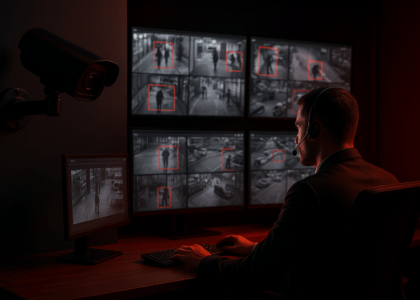
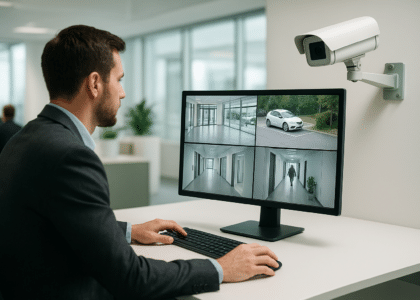
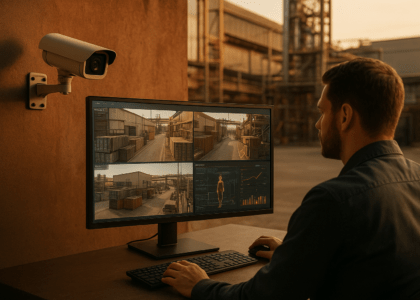
AI CCTV refers to adding video analytics to camera feeds so software can detect and classify events — for example, identifying people, vehicles, unusual movement in restricted areas, or counting occupants. Implementations vary: some processing happens on the camera or local edge devices, while others use on‑site or cloud servers.
Possible capabilities (subject to technical assessment)
Depending on camera quality, network and system design, AI CCTV projects can be designed to support features such as:
- Person and vehicle detection
- Perimeter and restricted‑area event alerts
- People counting and crowd estimation
- Unattended object detection
- Integration with monitoring dashboards and VMS
Specific capabilities (for example, ANPR or PPE detection) can be explored as part of a technical assessment and pilot to confirm feasibility and performance on your existing cameras.
Key considerations before you upgrade
Camera and network compatibility
Not all cameras capture imagery at the resolution or frame rate required for some analytics. A site compatibility assessment helps determine whether existing cameras, cabling and network bandwidth will support the chosen analytics approach.
Processing location: edge vs on‑site vs cloud
Decide where analytics will run based on latency, bandwidth, data retention and privacy needs. Edge processing reduces raw video uploads but may require compatible hardware. Cloud analytics offer scalability but need reliable network connectivity and clear data‑handling policies.
Privacy and compliance
Video analytics projects must consider local data protection requirements and internal policies. Define retention policies, access controls, and whether personal data is stored or only event metadata. Legal and HR teams should be involved early for sensitive applications.
Suggested rollout approach
- Start with a camera and site audit to assess compatibility.
- Define priority detection use cases (e.g., perimeter breaches, people counting).
- Run a small pilot on selected cameras to validate detections and workflows.
- Scale gradually, monitor performance, and refine rules and retention settings.
Use cases where AI CCTV can add value
AI CCTV can be explored for retail loss prevention, campus safety, perimeter monitoring, facility access control and event detection. Each use case requires tailored configuration and testing to match operational priorities.
Work with a local partner
Procuring AI CCTV is not just about algorithms — it’s about camera compatibility, infrastructure, privacy and operational workflows. Renbotics AI is headquartered in Delhi and develops AI CCTV concepts and automation solutions. We can discuss your site and explore a compatibility assessment or pilot to identify feasible options for your cameras and operations.
Conclusion
AI CCTV can make surveillance more actionable, but success depends on site specifics: camera quality, network, processing location and privacy rules. Start with a compatibility assessment and a focused pilot to validate the approach before scaling.
CTA: To discuss an AI CCTV compatibility assessment for your Delhi site, visit renbotics.in or message us to start the conversation.