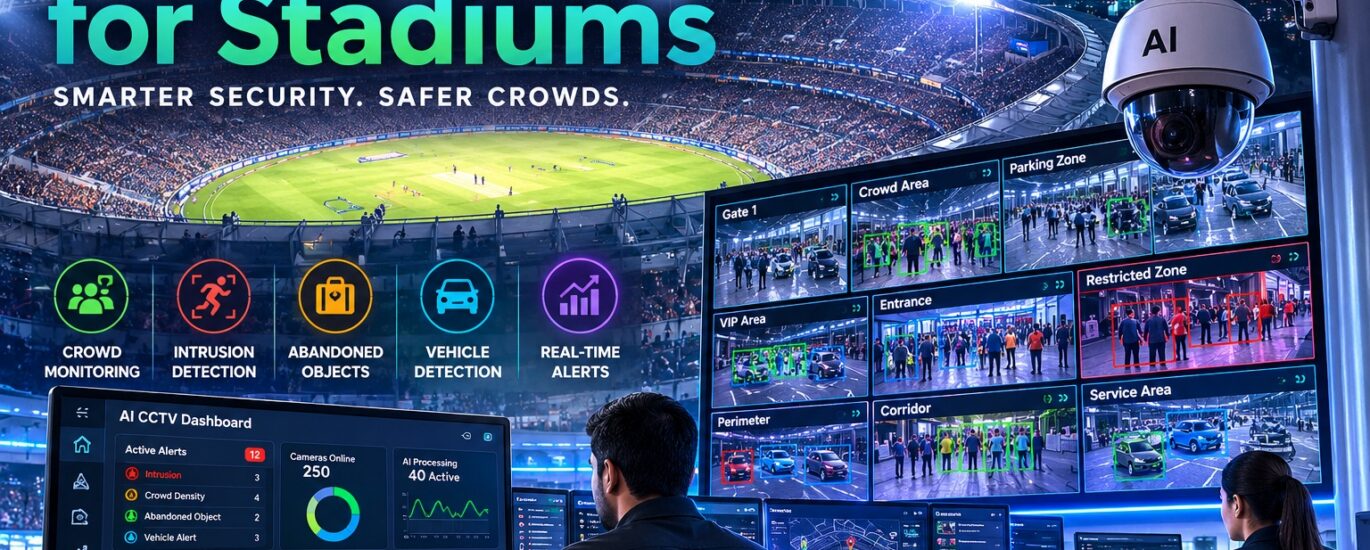
Introduction: Stadium Security Is Changing
A modern stadium can have hundreds of CCTV cameras covering entrances, exits, seating areas, parking zones, corridors, restricted areas, offices and perimeter locations.
The challenge is no longer simply installing cameras.
The real challenge is understanding what those cameras are seeing in real time.
During a normal day, only a limited number of areas may be active. During a major sporting event, however, thousands of people can enter the stadium within a short period, creating a completely different security environment.
This is where AI CCTV and intelligent video analytics can make a significant difference.
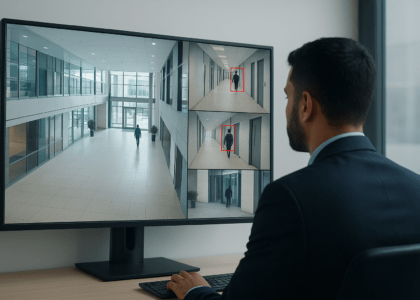
Instead of relying entirely on security personnel to watch hundreds of camera feeds, AI can continuously analyse video streams and identify events that require human attention.
What Is AI CCTV for Stadiums?
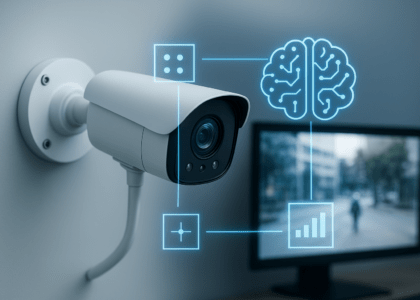
AI CCTV for Stadiums combines conventional surveillance cameras with artificial intelligence and video analytics.
Traditional CCTV primarily records video for monitoring and investigation.
AI-powered CCTV can go a step further by analysing the video and identifying specific events automatically.
A typical system can work like this:
CCTV Camera → Video Stream → AI Video Analytics → Event Detection → Alert → Human Response
For a stadium, this means security teams can potentially receive an alert when something important happens instead of having to discover the incident manually by watching multiple screens.
Why Stadiums Need Intelligent Video Analytics
Stadium environments are particularly challenging for security teams.
A large venue may contain:
- Multiple entrances and exits
- Large spectator areas
- Parking facilities
- Restricted zones
- VIP and VVIP areas
- Player and staff areas
- Offices and operational buildings
- Perimeter areas
- Service entrances
- Security checkpoints
- Corridors and access routes
During an event, the number of people moving through these areas can increase dramatically.
Even with a large security team, it is difficult for humans to continuously monitor hundreds of camera feeds without missing important events.
AI video analytics can act as an additional layer of intelligence over the existing surveillance infrastructure.
Key AI CCTV Applications in Stadiums
1. Crowd Monitoring
Crowd behaviour is one of the most important areas for stadium security.
AI video analytics can analyse crowd movement and density across designated areas.
Depending on the system and configuration, analytics can help identify:
- Increasing crowd density
- Congestion
- Unusual movement patterns
- Rapid movement through an area
- Overcrowding in designated zones
Security personnel can then investigate the relevant camera rather than manually searching through hundreds of feeds.
2. Restricted-Area Intrusion Detection
Stadiums contain areas that should only be accessible to authorised personnel.
These may include:
- Player areas
- Control rooms
- Equipment rooms
- Service entrances
- Staff-only zones
- Security areas
- Perimeter locations
AI can be configured to monitor virtual boundaries around selected areas.
When a person enters a restricted zone, the system can generate an event and notify the appropriate security personnel.
3. Abandoned Object Detection
An unattended bag or object in a sensitive location can require immediate investigation.
AI video analytics can potentially identify objects that have been left stationary for a defined period and generate an alert for human verification.
This can help security teams focus their attention on potentially important incidents.
4. Person and Vehicle Detection
AI can identify and classify objects such as:
- People
- Cars
- Buses
- Trucks
- Motorcycles
This can be particularly useful around:
- Stadium entrances
- Parking areas
- Service gates
- Loading areas
- Perimeter roads
Instead of treating every frame of video equally, the system can focus attention on relevant objects and events.
5. Unusual Activity Detection
One of the more advanced applications of AI video analytics is identifying activity that differs from normal patterns.
Depending on the AI technology being used, analytics can assist with detecting situations such as:
- Sudden crowd movement
- People entering areas at unusual times
- Prolonged presence in restricted areas
- Unusual movement around sensitive locations
These detections should be treated as alerts for human verification, rather than automatic conclusions.
AI CCTV During Major Sporting Events
A stadium does not operate at the same level of activity every day.
On a normal day, perhaps only certain operational areas require intensive monitoring.
During a major tournament or sporting event, the situation changes completely.
Large numbers of spectators may arrive simultaneously, increasing activity across entrances, parking areas, seating zones and other parts of the venue.
This creates an important opportunity for AI video analytics.
Normal Operations
Existing CCTV Infrastructure
↓
Selected active cameras
↓
AI analytics
↓
Event detection
↓
Security alert
Major Event
Existing CCTV Infrastructure
↓
Large number of active camera feeds
↓
AI video analytics
↓
Crowd + security + intrusion + object + vehicle monitoring
↓
Central incident dashboard
↓
Security response
The AI infrastructure can therefore be designed around the stadium’s actual operational requirements rather than treating every camera identically at all times.
AI Does Not Necessarily Mean Replacing Existing CCTV
One of the biggest advantages of AI video analytics is the possibility of building intelligence around an existing surveillance infrastructure.
A stadium may already have a large number of CCTV cameras, network equipment, recording systems and control-room infrastructure. Many modern IP camera systems follow interoperability standards such as ONVIF, which can make integration between cameras, video-management systems and other security technologies easier.
Rather than automatically replacing the entire system, an AI solution can potentially be integrated with compatible existing cameras and video-management infrastructure.
The exact architecture depends on factors such as:
- Camera technology
- Camera resolution
- NVR/VMS system
- Network architecture
- Video-stream availability
- AI processing requirements
- Storage requirements
- Existing server infrastructure
For this reason, a technical assessment should be performed before designing the final AI CCTV architecture.
From CCTV Footage to an Intelligent Security Event
The real value of AI CCTV is not simply drawing a box around a person.
The objective is to turn video into actionable security information.
For example:
Camera 42
↓
AI detects person
↓
Person enters restricted zone
↓
System identifies an intrusion event
↓
Relevant frame captured
↓
Short evidence clip generated
↓
Security team receives alert
↓
Operator reviews the event
↓
Security personnel respond
This changes CCTV from a passive recording system into a more intelligent security-support system.
A Central AI CCTV Dashboard
For a large stadium, security teams may benefit from a central dashboard showing important events rather than requiring operators to constantly watch every camera.
A dashboard could display:
Live Camera Feeds
Selected camera feeds can be displayed for real-time monitoring.
Active AI Alerts
For example:
- Intrusion detected
- Crowd density alert
- Abandoned object
- Restricted-area entry
- Vehicle detected
- Unusual activity
Camera Identification
Each event can contain:
- Camera number
- Time
- Event type
- Location/zone
- Evidence image or video
Incident History
Security personnel can review previous events and investigate incidents using timestamps and camera information.
The Role of Human Security Teams
AI CCTV for stadiums should not be viewed as a replacement for professional security personnel.
Instead, AI can function as an additional layer of intelligence.
The AI identifies potentially important events.
The security team verifies the situation.
The security team then decides what action should be taken.
This creates a practical workflow:
AI Detection → Human Verification → Security Response
The objective is to help security teams respond faster and focus their attention where it matters most.
Building AI CCTV for Stadiums
AI CCTV for stadiums deployment needs to consider much more than just the AI model.
A complete system may involve:
- Existing CCTV cameras
- IP video streams
- NVR/VMS integration
- Network infrastructure
- AI processing servers
- GPU resources where required
- Video storage
- AI analytics software
- Central monitoring dashboard
- Alert mechanisms
- User access controls
- System monitoring
- Maintenance and support
The architecture should be designed according to the stadium’s camera count, resolution, network infrastructure, security requirements and event schedule.
The Future of Stadium Security
The future of AI CCTV for stadiums surveillance is moving beyond simply recording what happened.
The next generation of security systems will increasingly focus on:
Detecting → Understanding → Alerting → Responding
AI video analytics can help stadium operators move toward this model by turning large volumes of CCTV footage into actionable information.
As stadiums become larger and sporting events attract increasingly large crowds, intelligent surveillance can become an important component of modern security infrastructure.
Conclusion
AI CCTV for Stadiums can contain hundreds of cameras covering large and complex environments.
The challenge is not simply collecting more video.
The challenge is understanding that video quickly enough to support security teams when something important happens.
AI CCTV for stadiums and intelligent video analytics can help transform conventional surveillance into a more responsive security system by identifying people, vehicles, restricted-area activity, crowd patterns and other potentially important events.
For stadiums, the future of CCTV is not just more cameras.
It is smarter cameras, intelligent video analytics and faster incident response.
Renbotics AI
At Renbotics AI, we are exploring intelligent CCTV and AI automation solutions designed to help organisations move from traditional video surveillance toward intelligent, event-driven security systems.
Whether the requirement involves a small facility or a large multi-camera environment, the first step is understanding the existing CCTV infrastructure, operational requirements and security objectives before designing the appropriate AI architecture.
The goal is simple: turn CCTV footage into actionable intelligence.